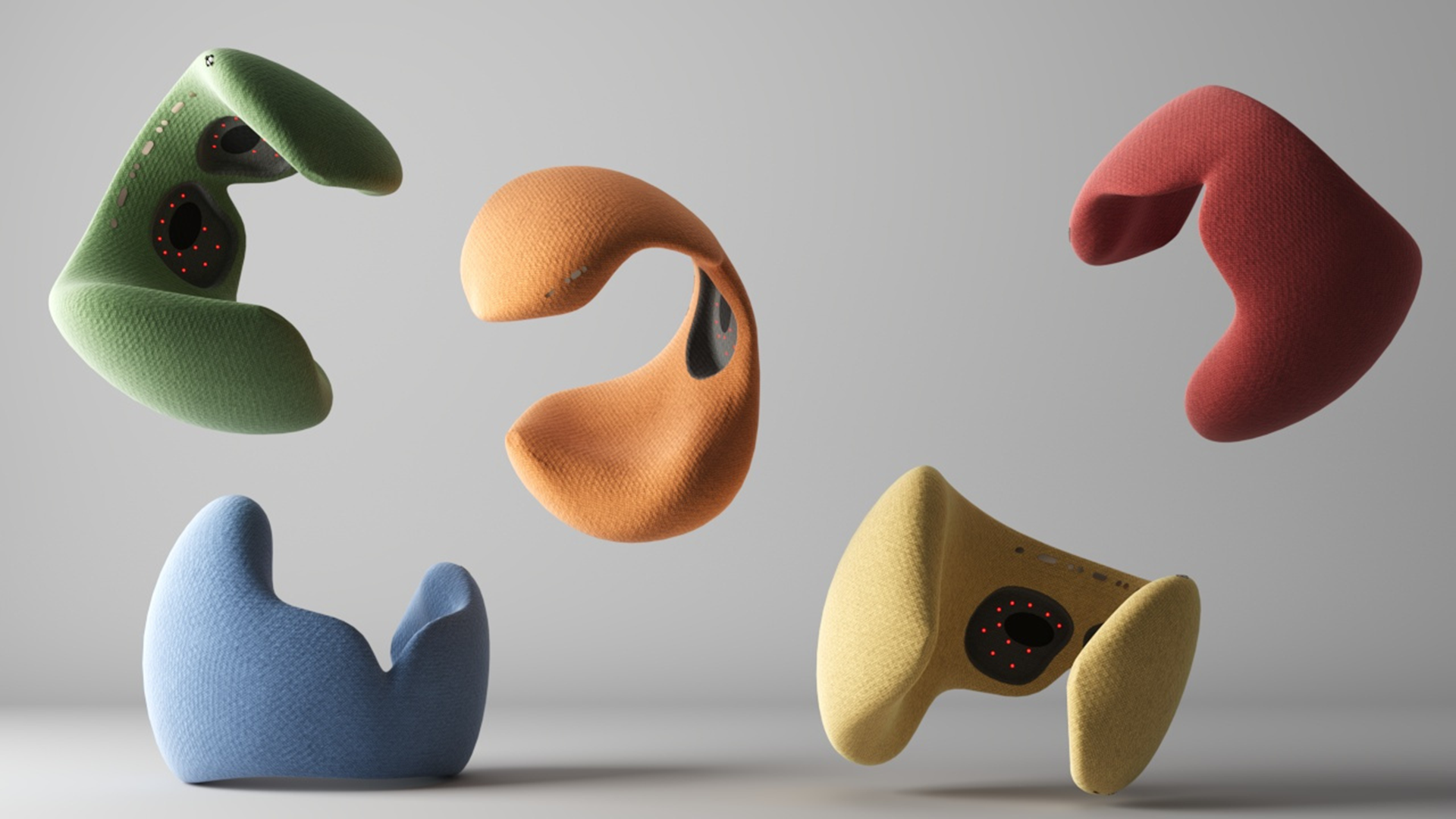
A wearable office napping system.
Designed to improve recovery, comfort, and post-nap productivity in shared workspaces.
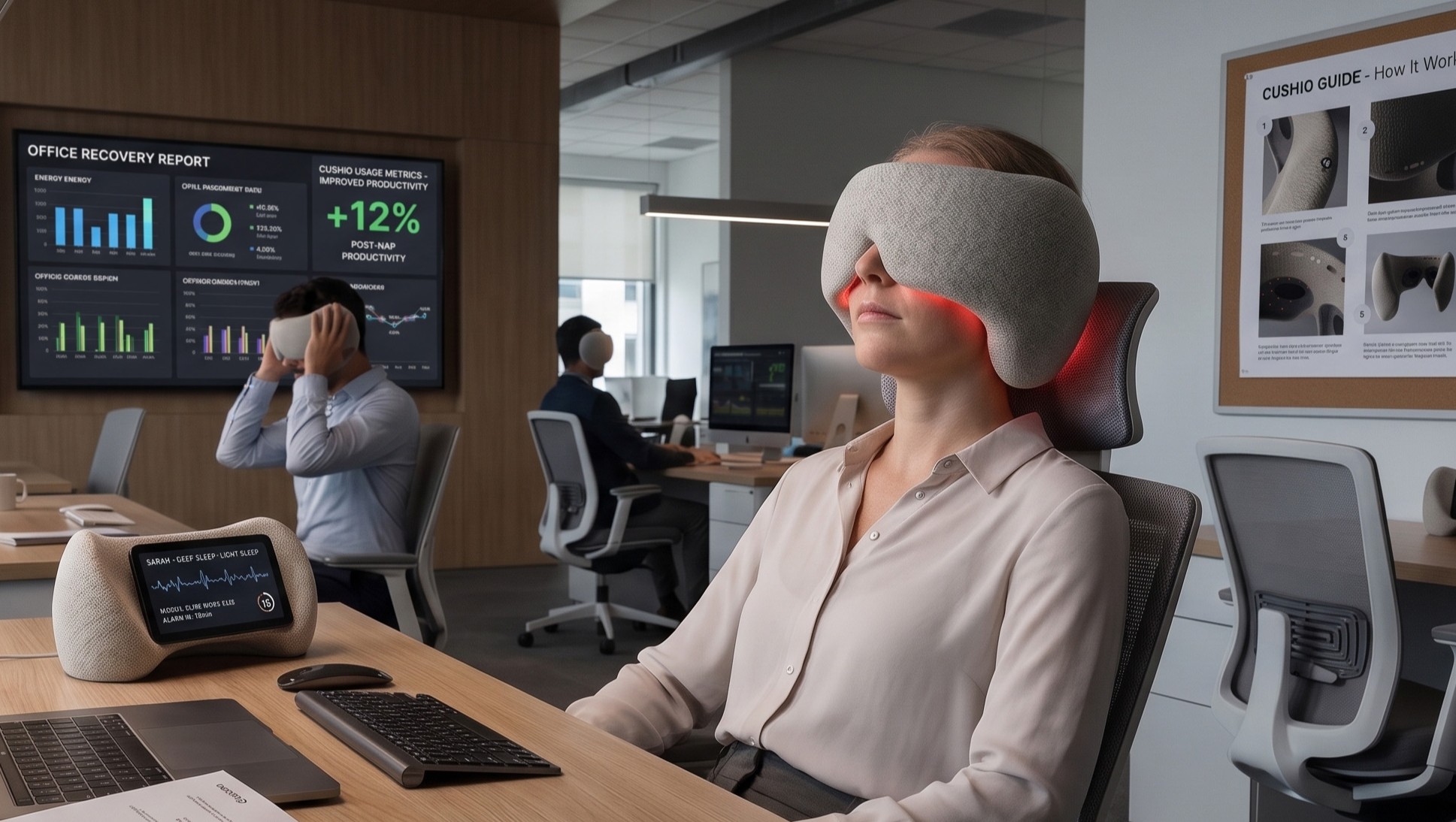
Cushio explores how workplace rest can become a guided, restorative experience through ergonomic support, sensory isolation, and adaptive sleep technology. Designed for shared offices, the system integrates audio, lighting, and sleep-monitoring to reduce sleep inertia and support short-term recovery during work breaks.
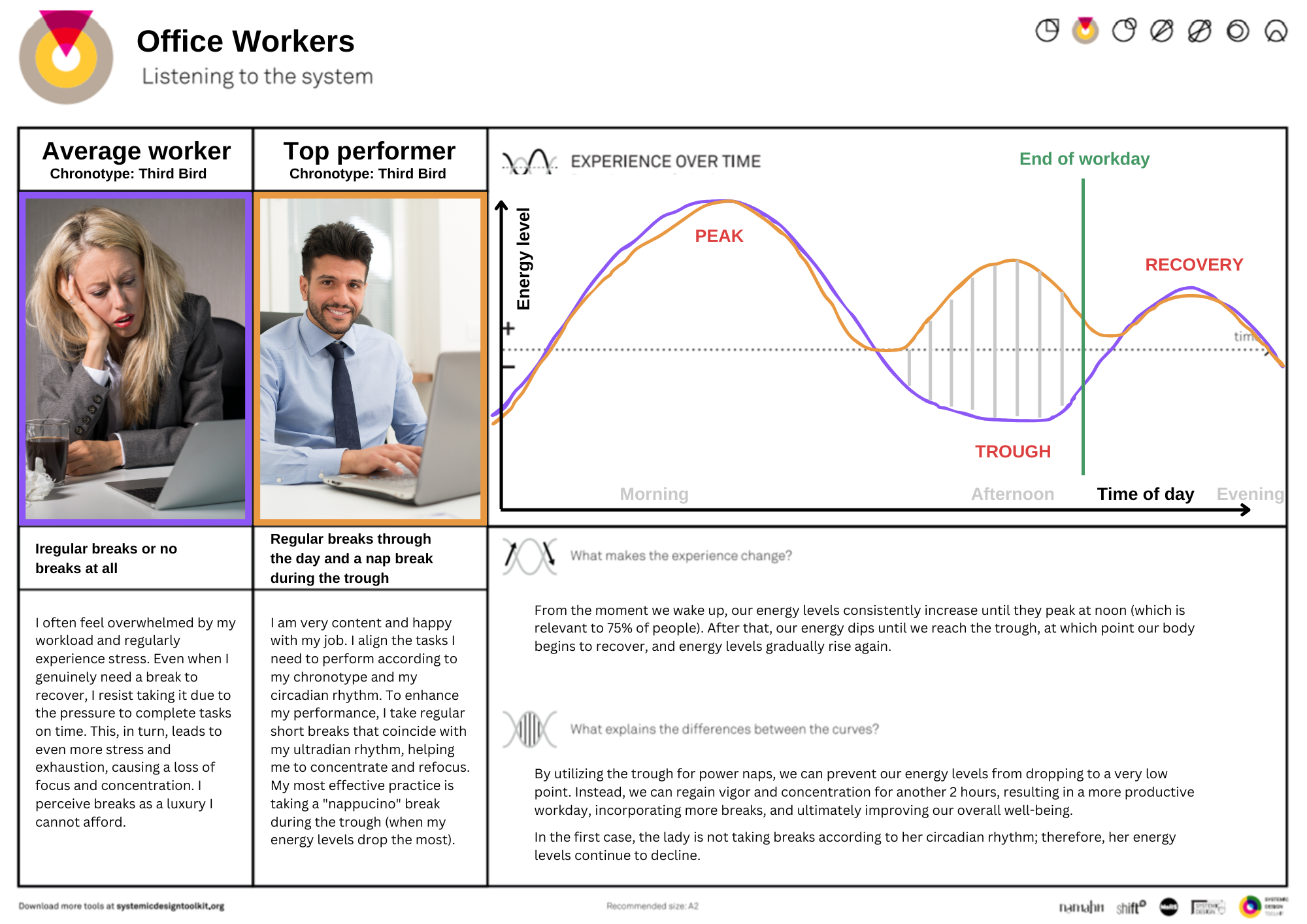
Workplace napping often fails to provide real recovery.
Short naps can improve cognitive performance, mood, and productivity, yet most office environments are not designed to support restorative rest.
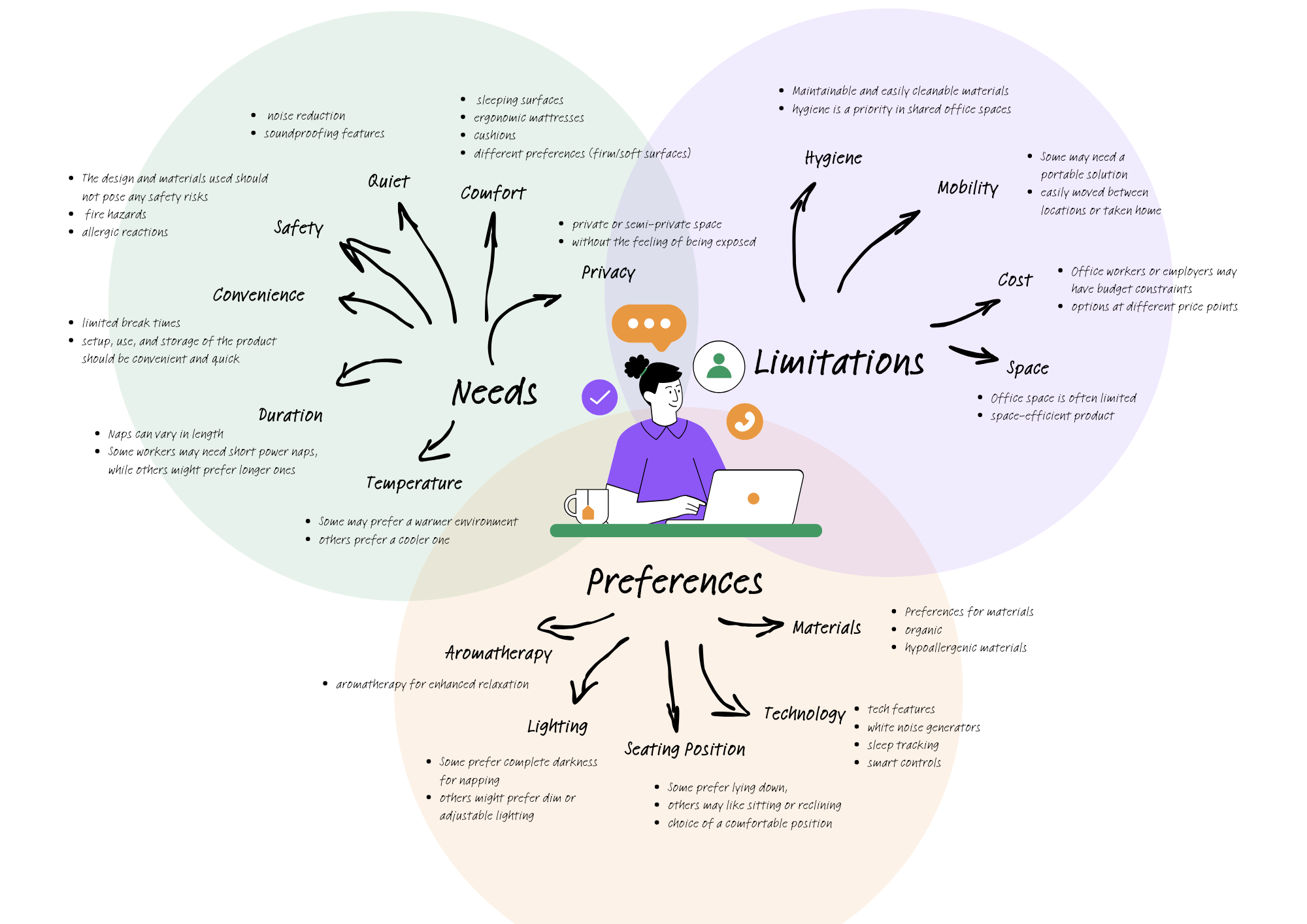
Existing workplace napping solutions often:
- lack comfort
- provide poor privacy
- create hygiene concerns
- fail to reduce environmental distractions
- interrupt users abruptly through traditional alarms
The result: users experience sleep inertia, discomfort, or avoid resting altogether despite mental fatigue.
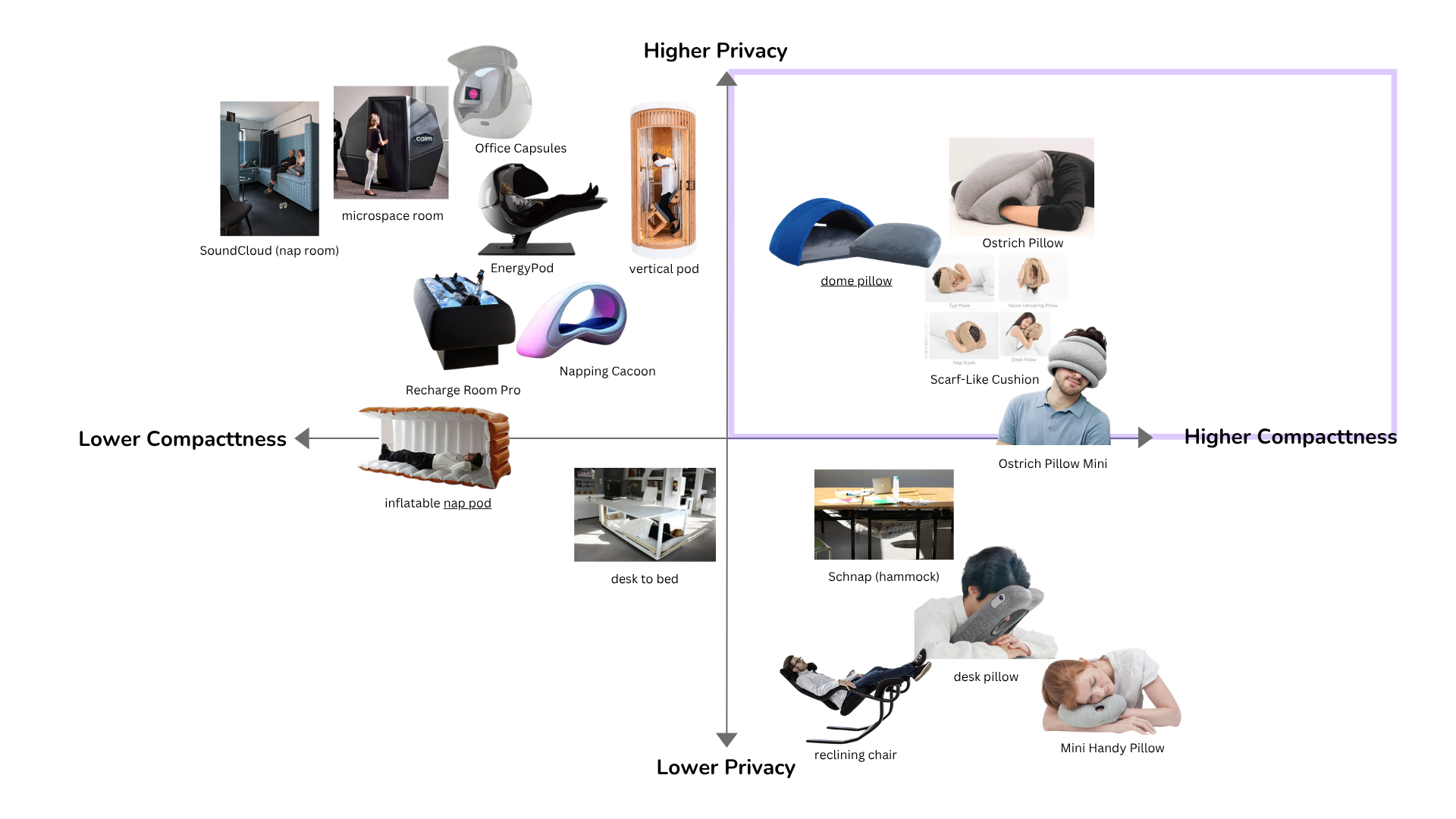
Mapping existing solutions by compactness and privacy revealed a gap for a portable yet immersive recovery experience.
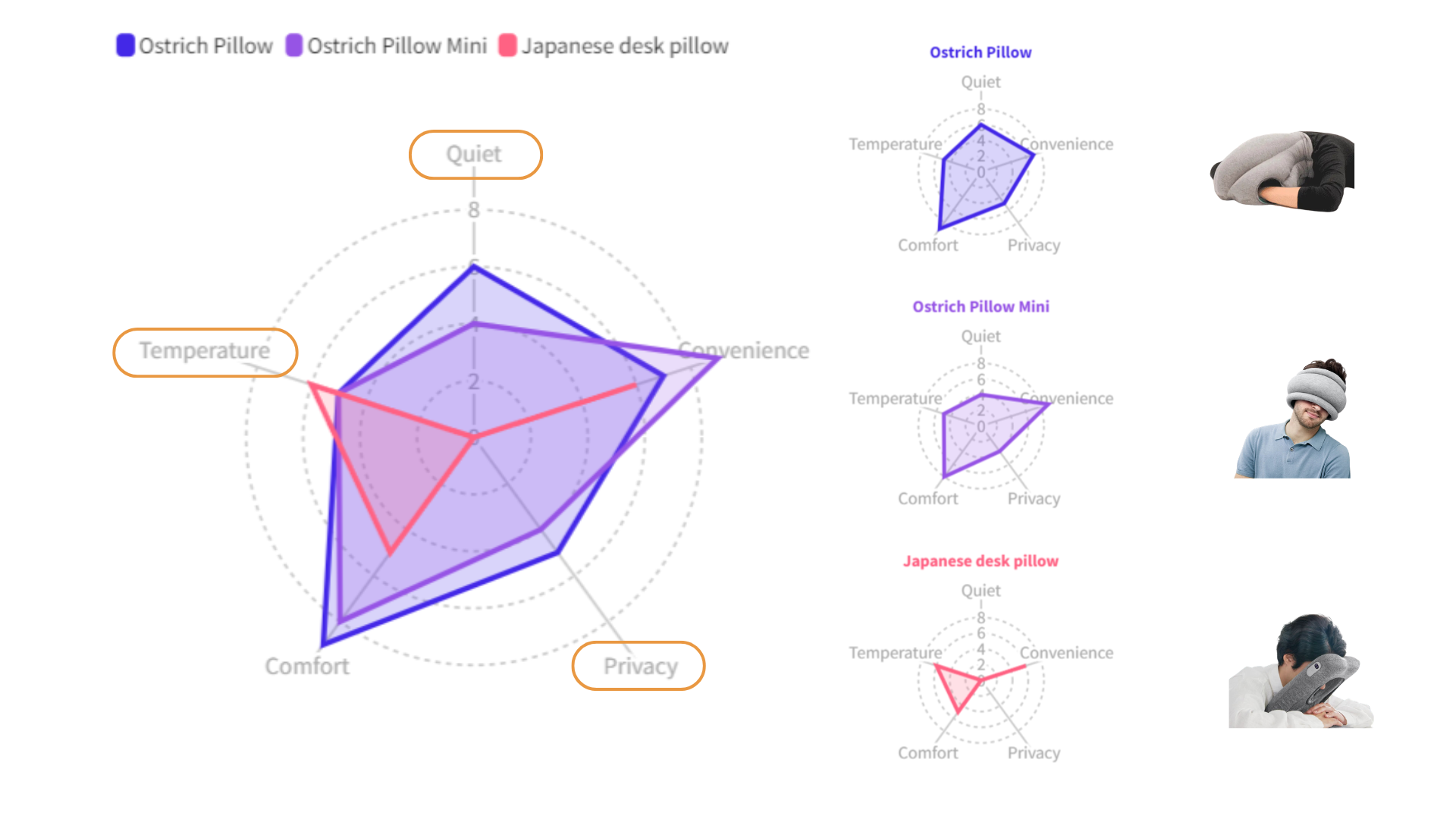
Four insights, four design constraints.
- 01
Privacy + social discomfort
Users avoid workplace naps due to social discomfort and lack of privacy.
- 02
Sleep inertia from abrupt alarms
Traditional alarms increase sleep inertia and reduce perceived recovery quality.
- 03
Desk-supported posture
Desk-supported sleeping positions are significantly more common than fully reclined rest in offices.
- 04
Hygiene in shared environments
Shared products raise hygiene concerns in workplace settings.
These insights shifted the project from designing a simple pillow toward creating a controlled multisensory recovery experience.
Seven objectives, balanced.
- Improve comfort during short office naps
- Support natural desk-resting postures
- Reduce environmental distractions
- Minimise sleep inertia after waking
- Maintain hygiene in shared environments
- Create a calming and intuitive user experience
- Integrate adaptive sleep technology without increasing complexity
Rest, privacy, and interaction - explored honestly.
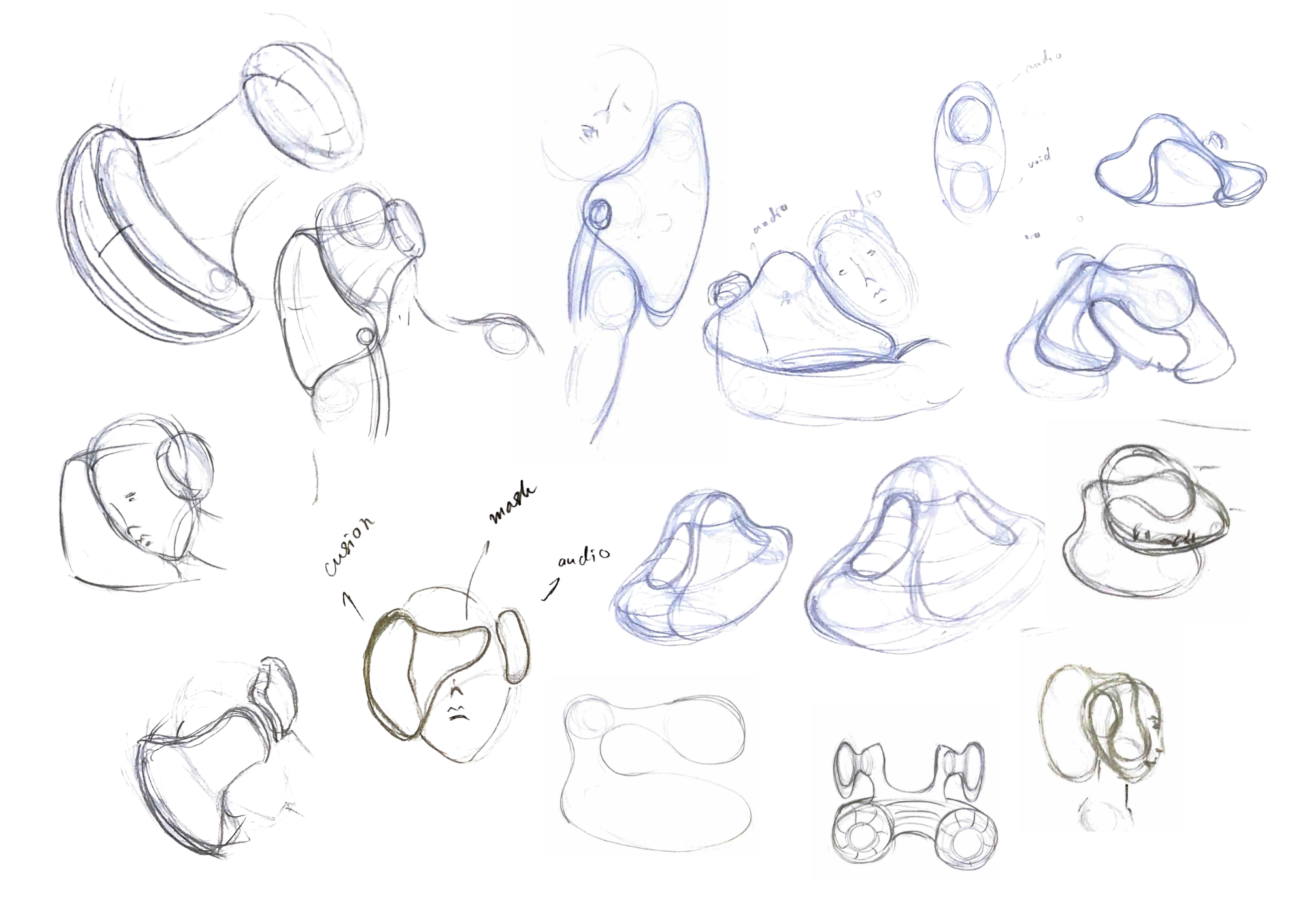
Early exploration covered desk-supported leaning solutions, under-desk concepts, enclosed privacy systems, and wearable head-supported solutions. Each approach was tested against comfort, compactness, portability, and social acceptability.
Wearable directions were prioritised over fixed environmental solutions to better balance hygiene, portability, privacy, and social comfort within shared office settings.
Stronger sensory isolation, but disrupted hairstyles, felt visually intrusive, and reduced approachability in workplace settings. More enclosed concepts also compromised portability and flexibility.
Best balance of comfort, portability, privacy, hygiene, and sensory control. The semi-open structure reduced social discomfort while still creating a protected resting experience.
.png)
Form, privacy, sensory isolation.
- 01
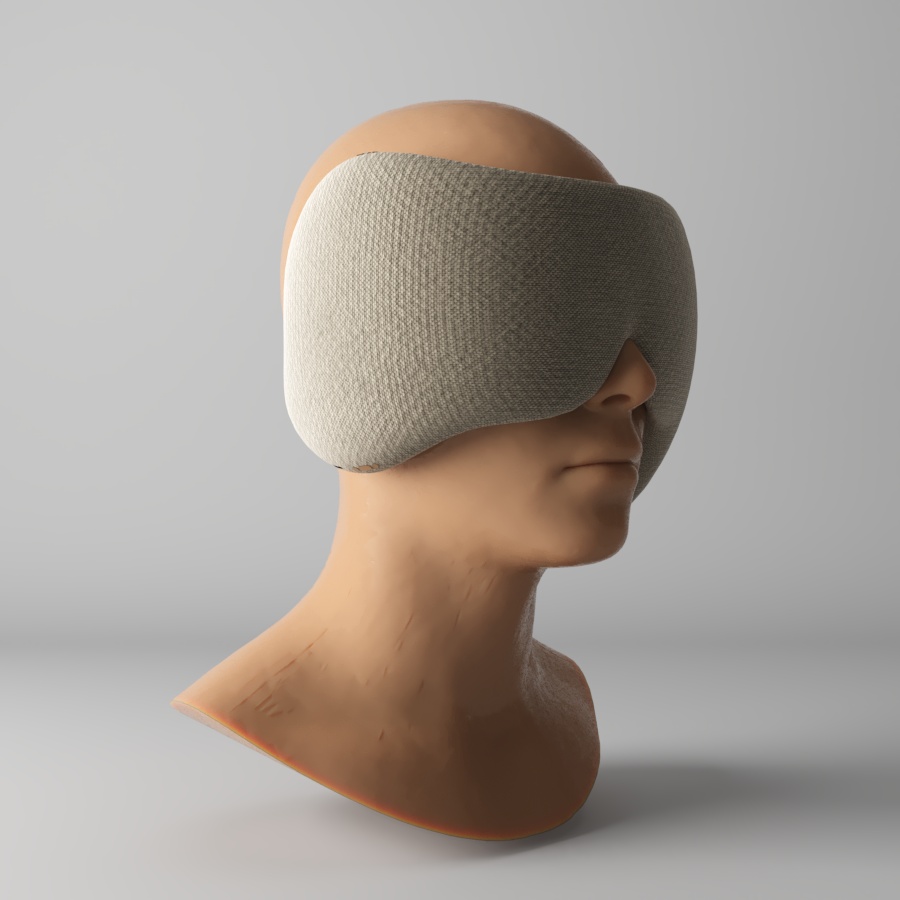
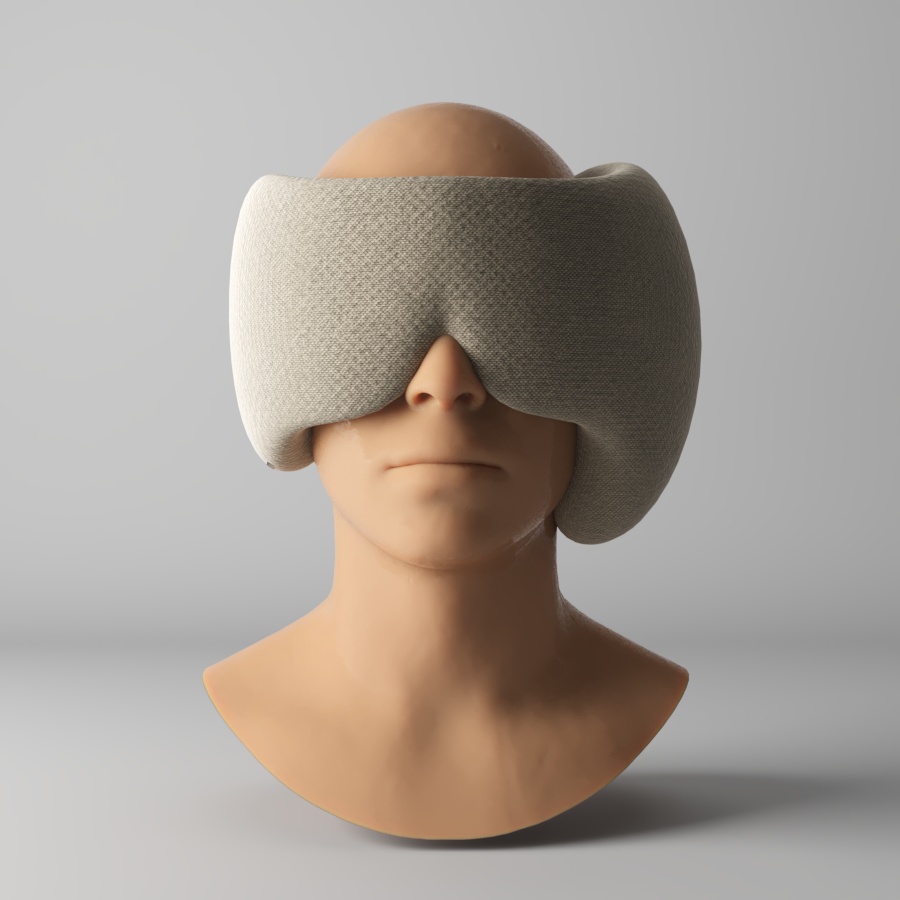
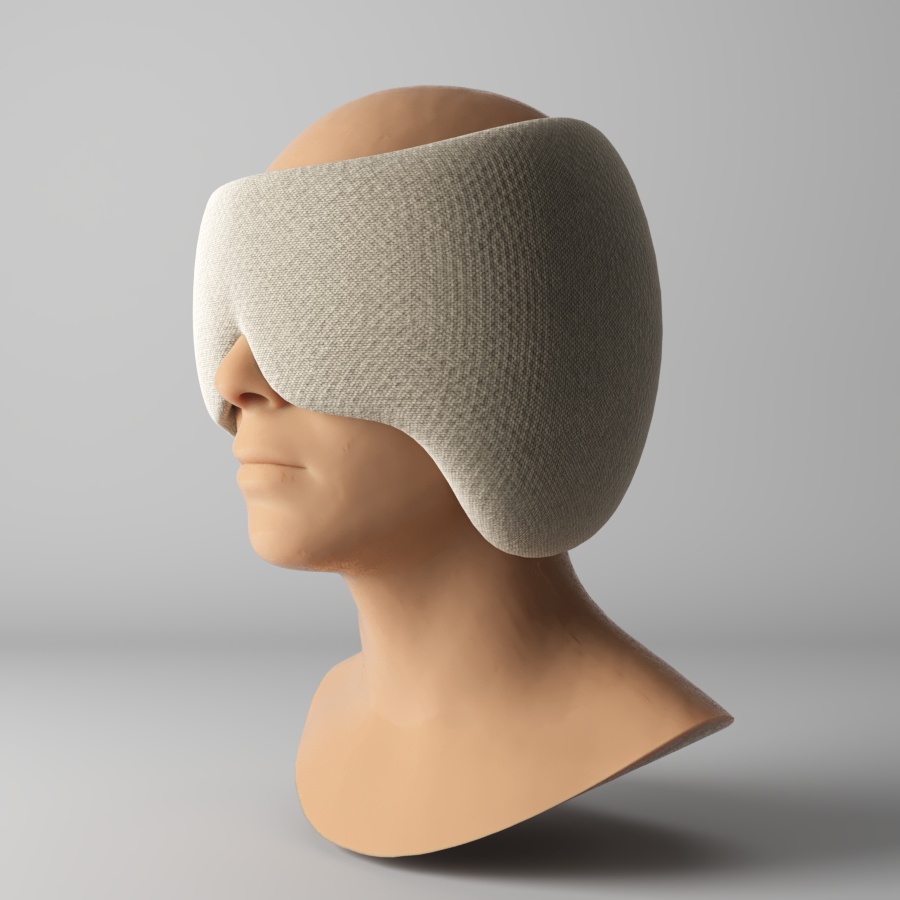
Asymmetrical form
Shaped around observed desk-resting positions. Supports forward and side-leaning postures; distributes pressure evenly; adapts to different users without adjustment mechanisms.
- 02
Controlled sensory environment
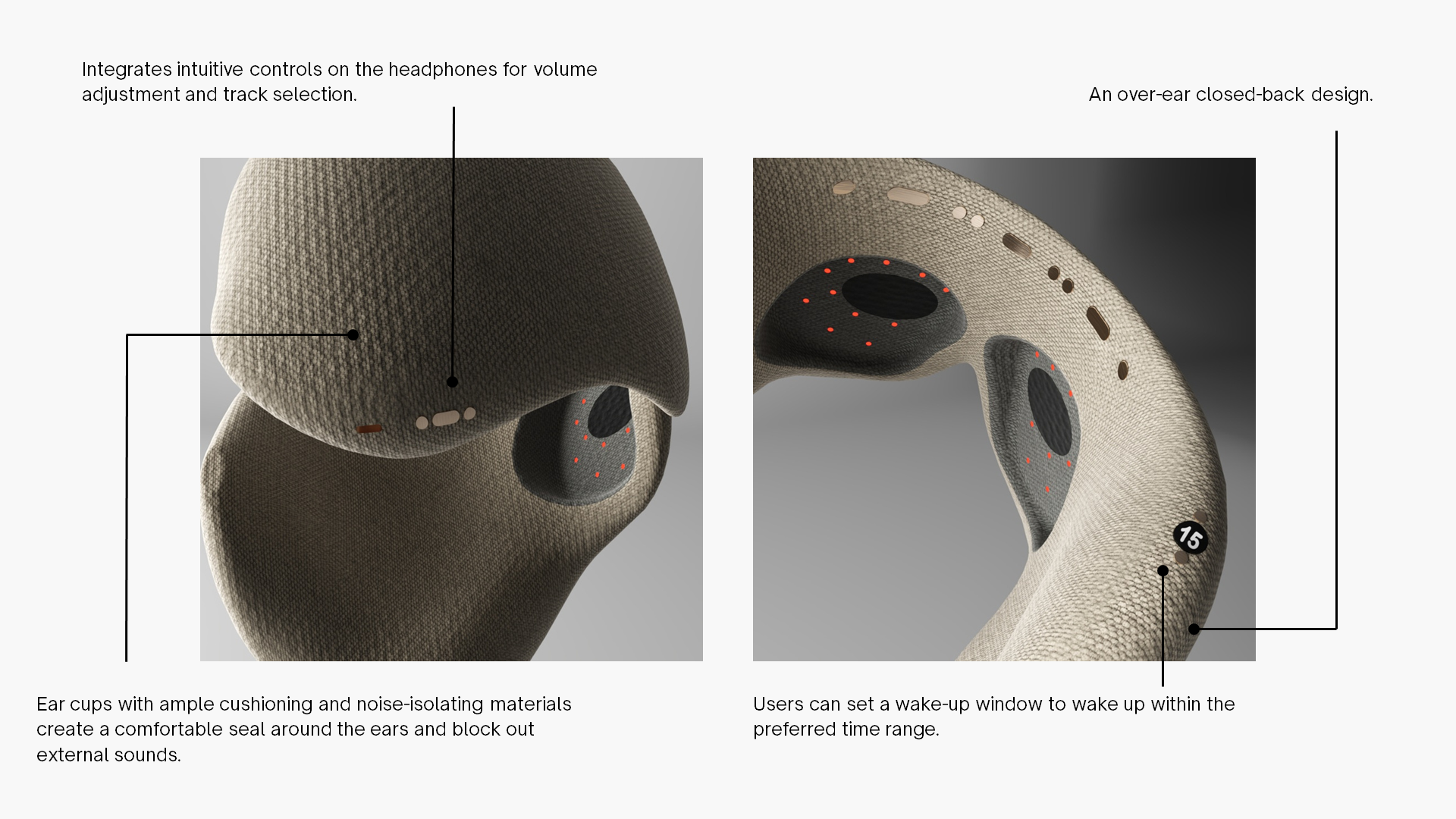
Rather than fully isolating the user, the enclosed over-ear structure softens external noise, blocks visual stimuli, and maintains a lightweight, approachable appearance.
- 03
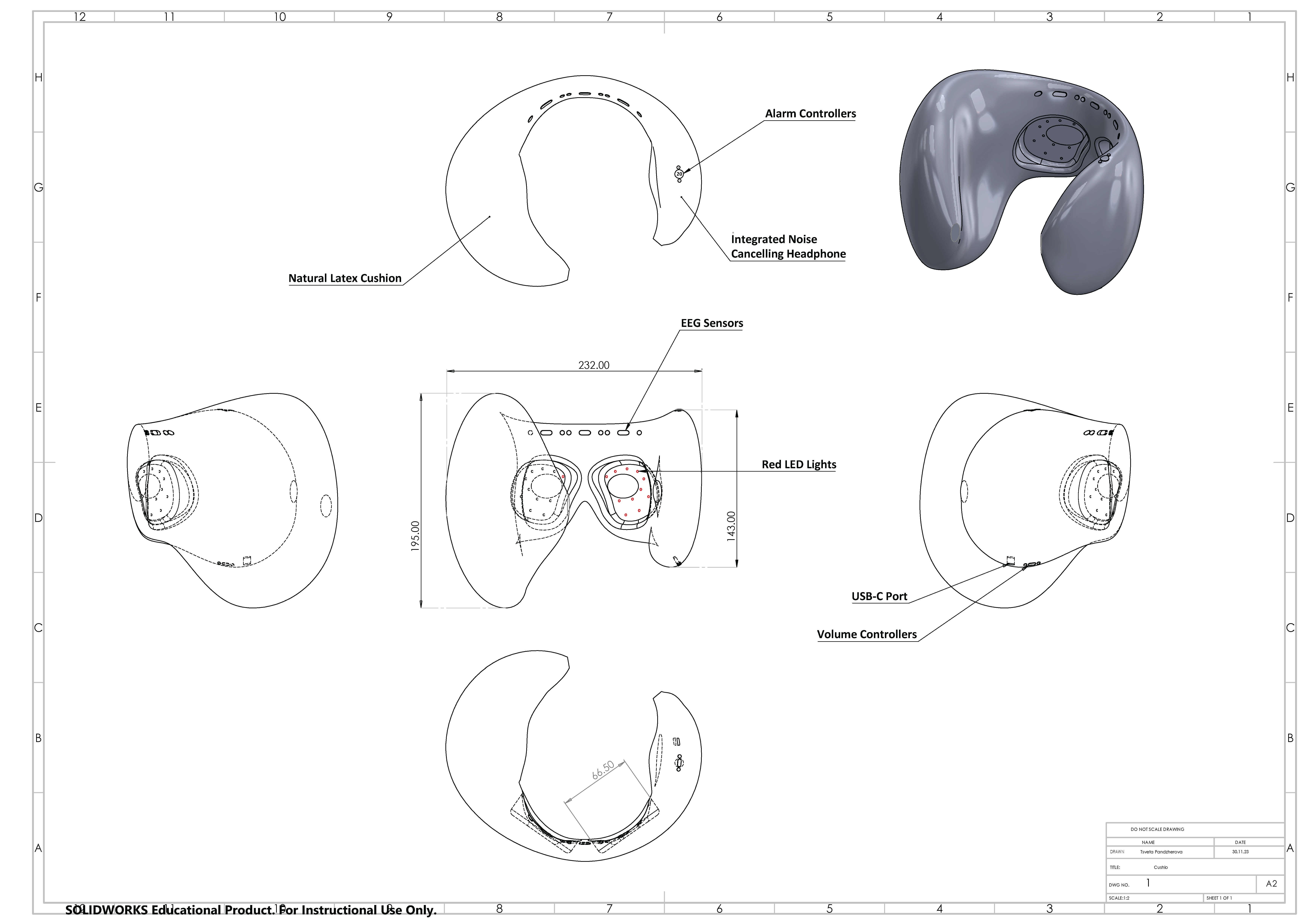
Embedded controls
Volume, sound environment, and wake-up window controls. The interaction system was deliberately simplified to reduce cognitive effort before rest.
Sound + light, working with the brain.
- 01
Sleep monitoring
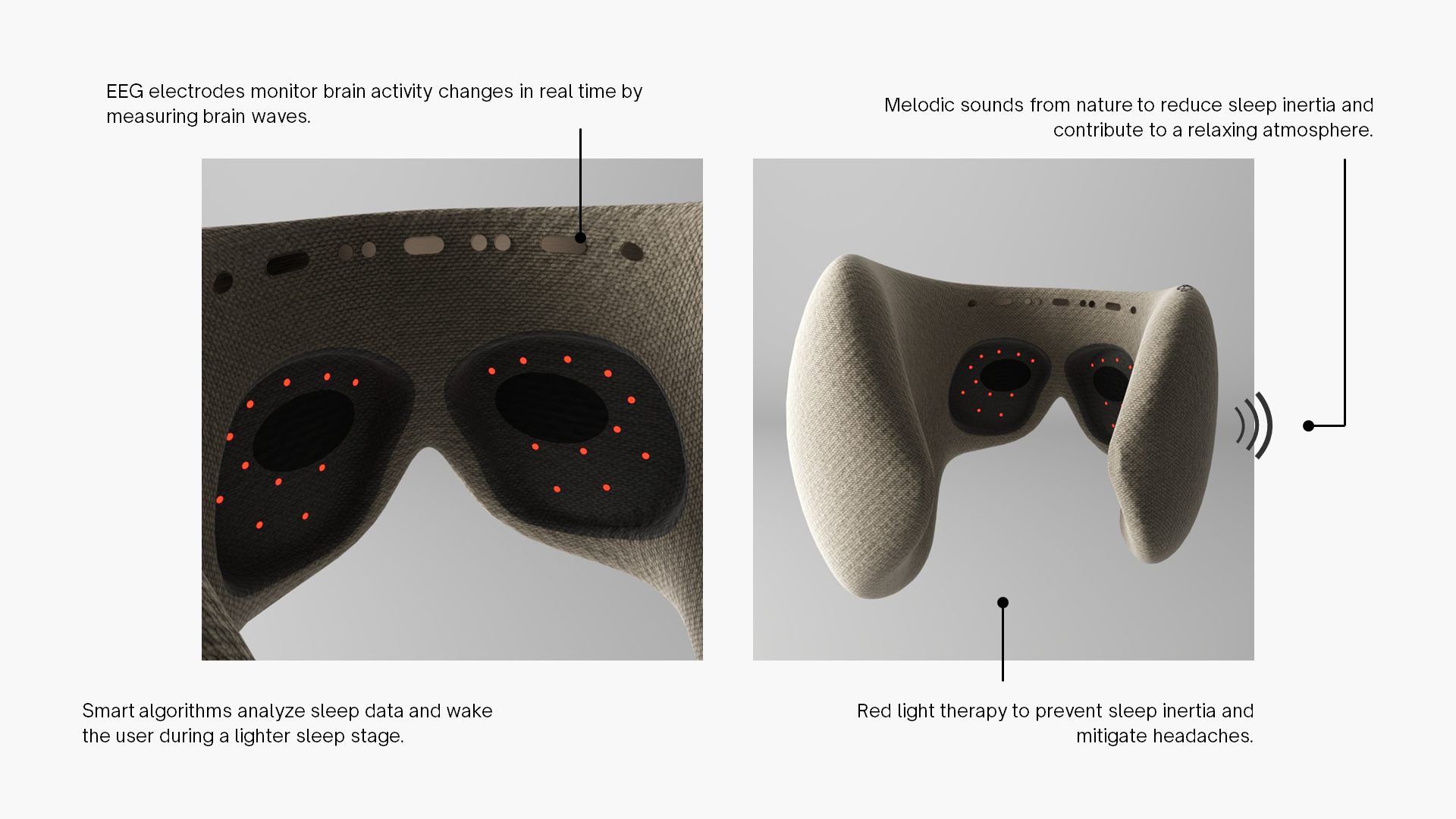
Integrated EEG sensors monitor sleep-stage changes in real time, identifying lighter sleep phases for waking. Reduces abrupt interruption and helps minimise post-nap sleep inertia.
- 02
Multisensory recovery
Sound and light stimuli guide users through both relaxation and waking. Nature-inspired soundscapes help mental disengagement; gradual red light exposure provides a softer waking transition.
Layered for comfort, hygiene, and longevity.
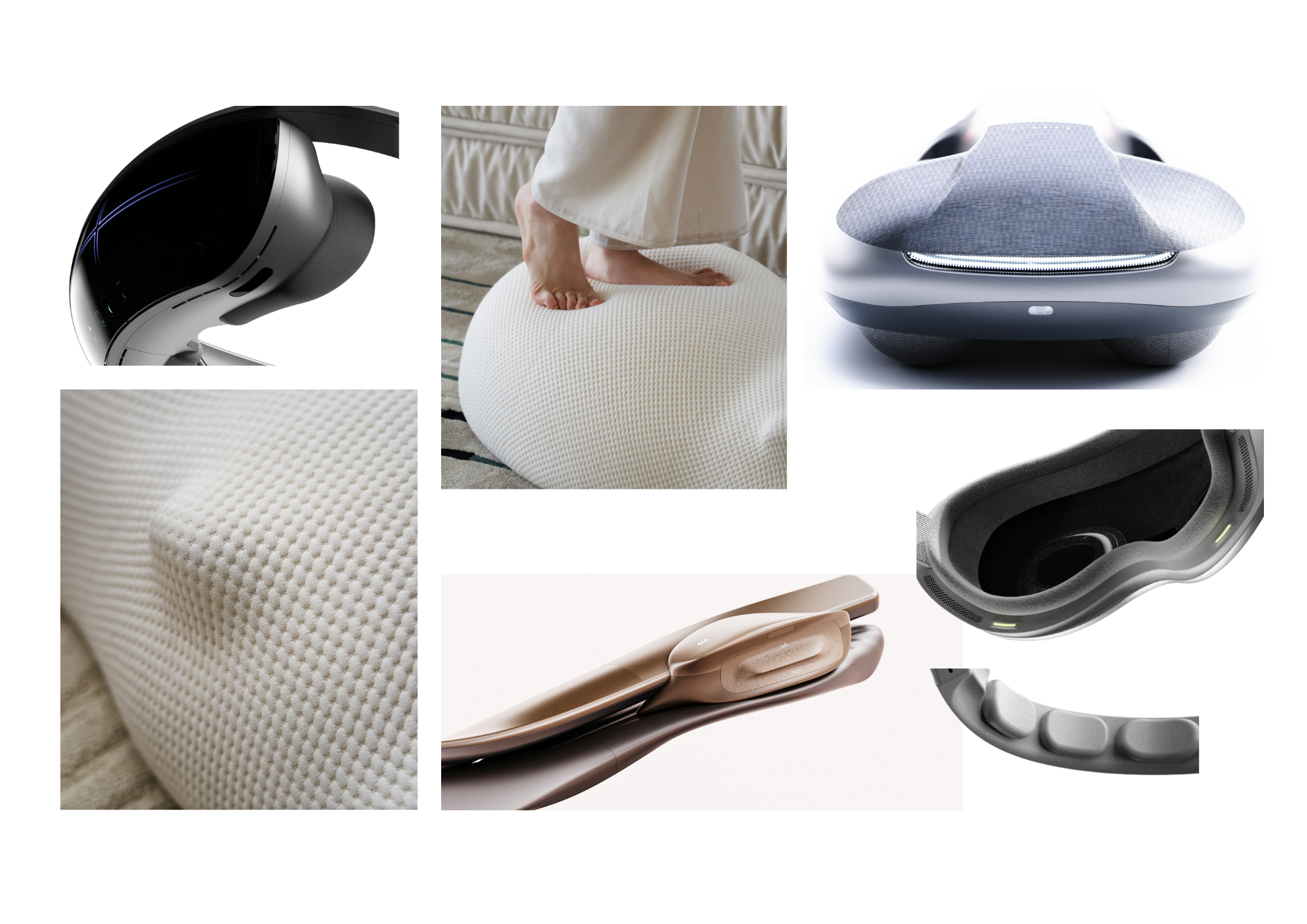
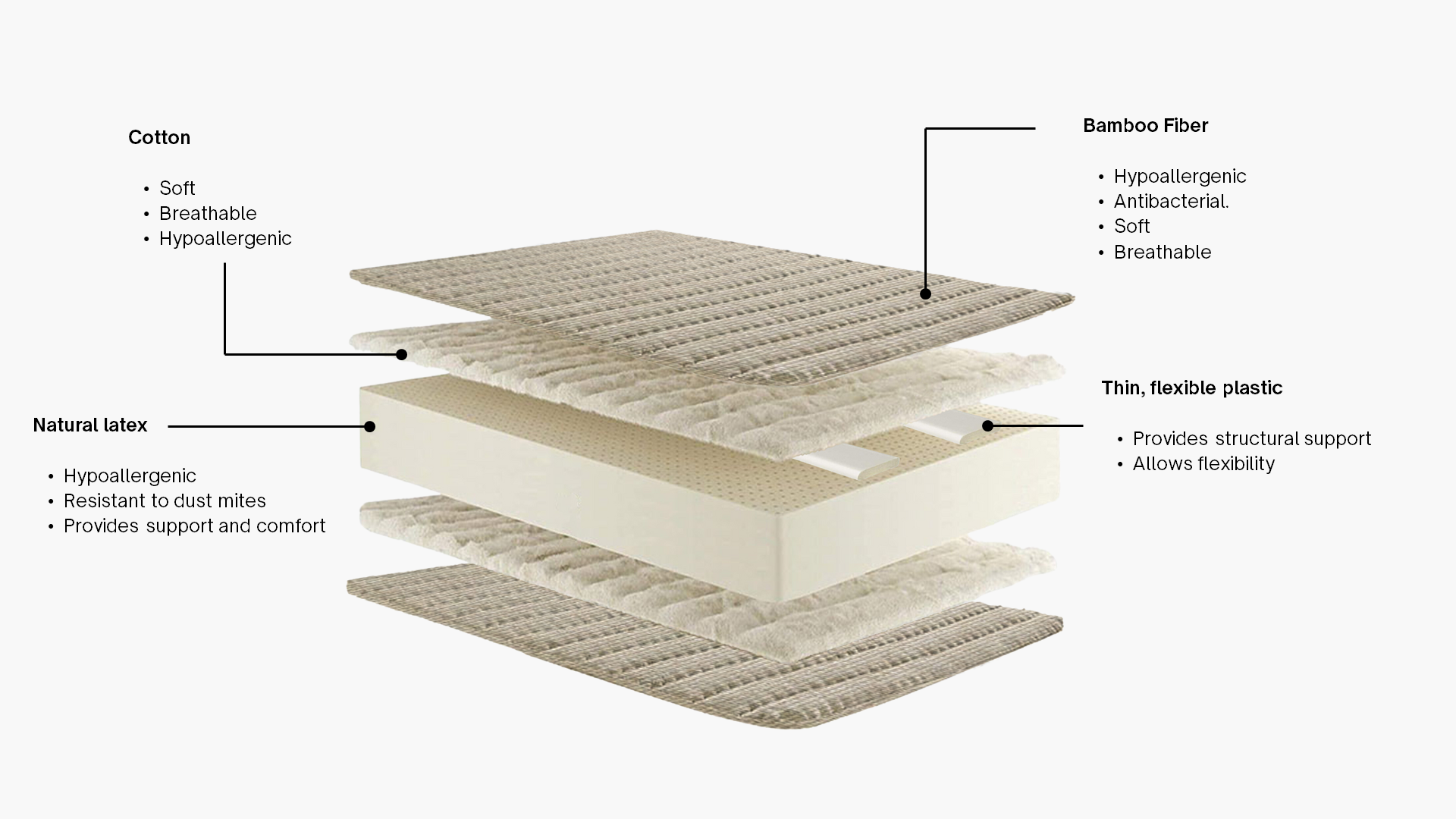
Material selection prioritised comfort, hygiene, breathability, and durability:
- breathable cotton outer layer
- bamboo fibre textiles for skin contact
- natural latex cushioning for pressure distribution
- flexible structural components for adaptive fit
The layered construction improves long-term comfort while reducing hygiene concerns in shared environments.
A guided micro-recovery, not a passive product.
- 01
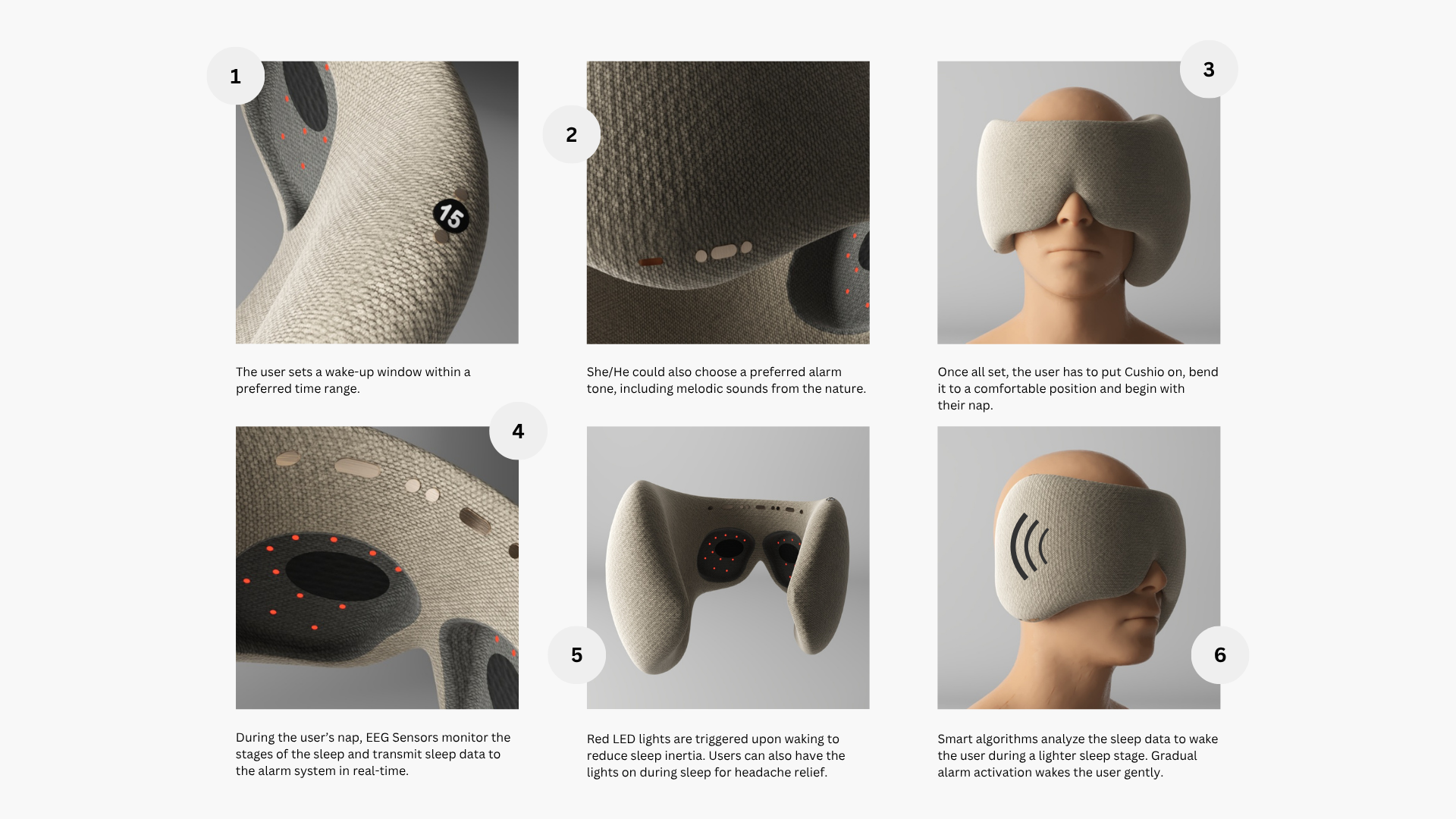
Set wake-up window
Users select a preferred wake-up range.
- 02
Choose sound environment
Nature-based audio profiles can be personalised before resting.
- 03
Begin rest
The wearable adapts naturally to the user’s posture during desk-supported naps.
- 04
Monitor sleep state
Sensors analyse sleep-stage transitions in real time.
- 05
Prepare wake-up
Light and sound cues are gradually introduced.
- 06
Wake during lighter sleep
The system wakes the user during a lighter sleep stage to reduce sleep inertia.
Honest about what’s speculative.
Certain aspects of the project remain speculative and would require further engineering validation - EEG integration within soft wearable materials, sensor reliability during movement, and lightweight embedded hardware implementation. Further collaboration with engineers and sleep specialists would be necessary to develop the system into a production-ready product.
A wearable, in an ecosystem.
A mobile app could provide personalised sleep insights, adaptive sound profiles, sleep habit tracking, and environmental customisation. The wearable becomes a sensor surface for a wider behavioural system.
Investigating sensory patterns in nature that improve relaxation, analysing how sound textures influence recovery, and studying the effects of light exposure on circadian rhythms after short naps.
From physical object to restorative experience.
Cushio allowed the exploration of workplace well-being through the intersection of product design, ergonomics, and adaptive user experiences. The project highlighted the importance of balancing privacy and social acceptability, comfort and portability, speculative technology and realistic usability.
Cushio reimagines workplace rest as an intelligent and restorative experience - combining ergonomic product design with adaptive sensory interaction.