A home-based cervical screening concept.
Improving accessibility, privacy, and comfort in women’s healthcare through human-centred industrial design.
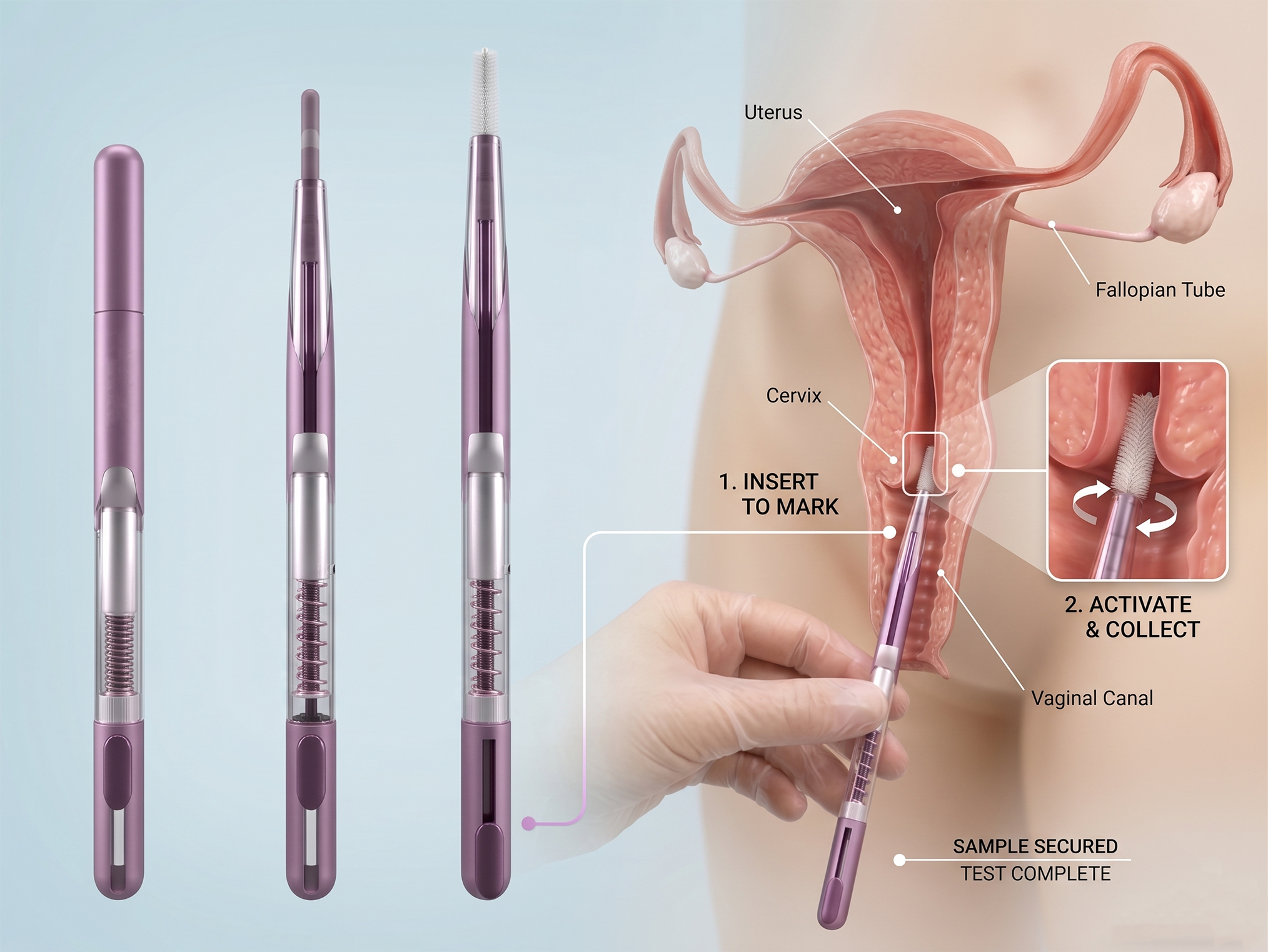
Selfscreen is a speculative concept for an at-home HPV self-collection device. The project explored how industrial design and healthcare accessibility could intersect to create more empowering screening experiences.
Cervical cancer is preventable. The barriers are emotional, social, and systemic.
Cervical cancer is highly preventable, yet many women avoid routine screenings due to discomfort, anxiety, accessibility barriers, scheduling difficulties, and lack of privacy.
Traditional screening methods often rely on clinical appointments and invasive procedures that discourage regular testing.
SELFSCREEN is a speculative home-screening concept that enables private HPV sample collection, reduces discomfort, simplifies usability, supports accessibility, and introduces a reusable + disposable architecture.
The challenge is not only medical.
Cervical cancer is one of the most preventable cancers.
Many women delay screening due to embarrassment, discomfort, or limited access.
Testing enables self-collected screening methods at home.
The challenge wasn’t only medical. It was emotional, social, and systemic.
Mapping the barriers to screening.
- 01
Physical
Pain, mobility limitations, menopause-related discomfort.
- 02
Emotional
Embarrassment, anxiety, fear of results.
- 03
Systemic
Appointment availability, travel, healthcare inequality.
- 04
Cultural
Stigma, social discomfort, lack of awareness.
Healthcare is increasingly moving toward accessible, home-based, patient-controlled experiences. The wider landscape telemedicine, decentralised healthcare, mobile clinics, home diagnostics, preventative care - pointed toward an opportunity for self-collected screening to bridge clinical rigour with domestic comfort.
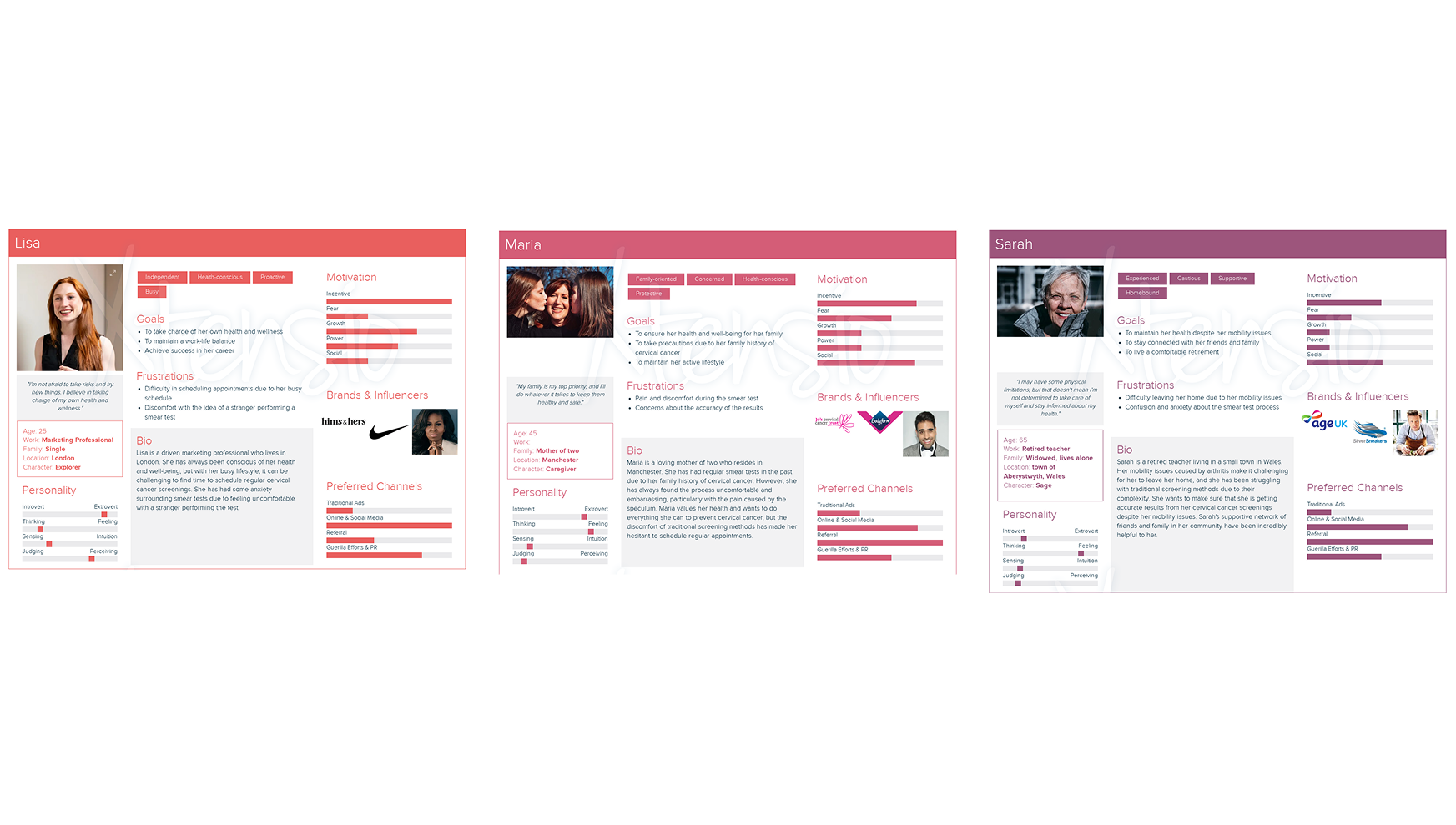
How might we…
Create a cervical screening experience that:
- feels less invasive
- increases accessibility
- enables private self-testing
- simplifies sample collection
- supports accurate positioning
- reduces anxiety around screening
Iteration through honest rejection.
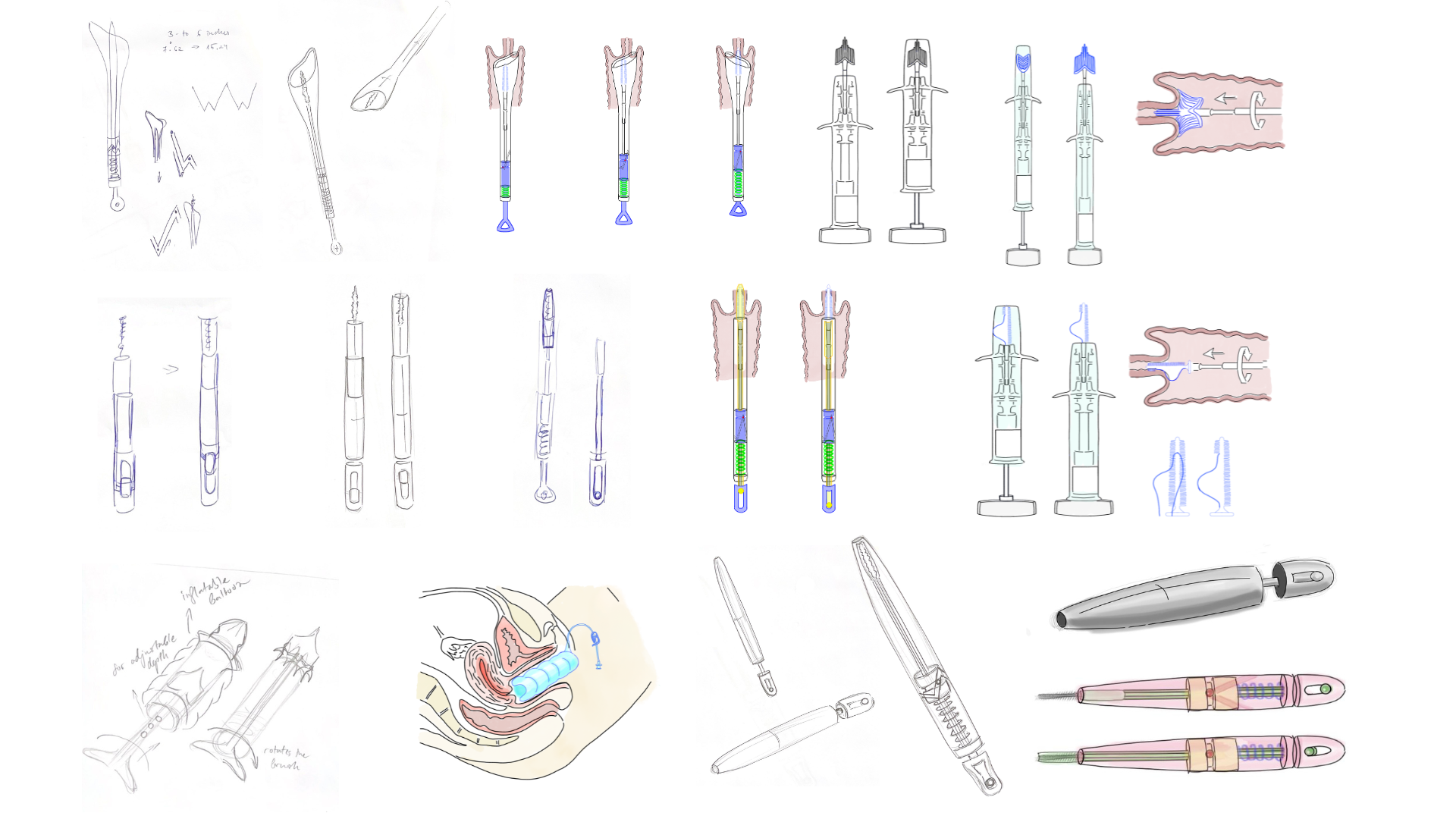
Early exploration covered expandable, inflatable, brush-deployment, sleeve-based, and varied insertion concepts. Each had to be evaluated against three competing constraints: stability, comfort, and deployment reliability.
The most useful learning came from why concepts were dropped - stability issues in early prototypes pushed the form toward a stiffer outer body; deployment-complexity problems simplified the brush mechanism; comfort concerns reshaped the insertion profile.
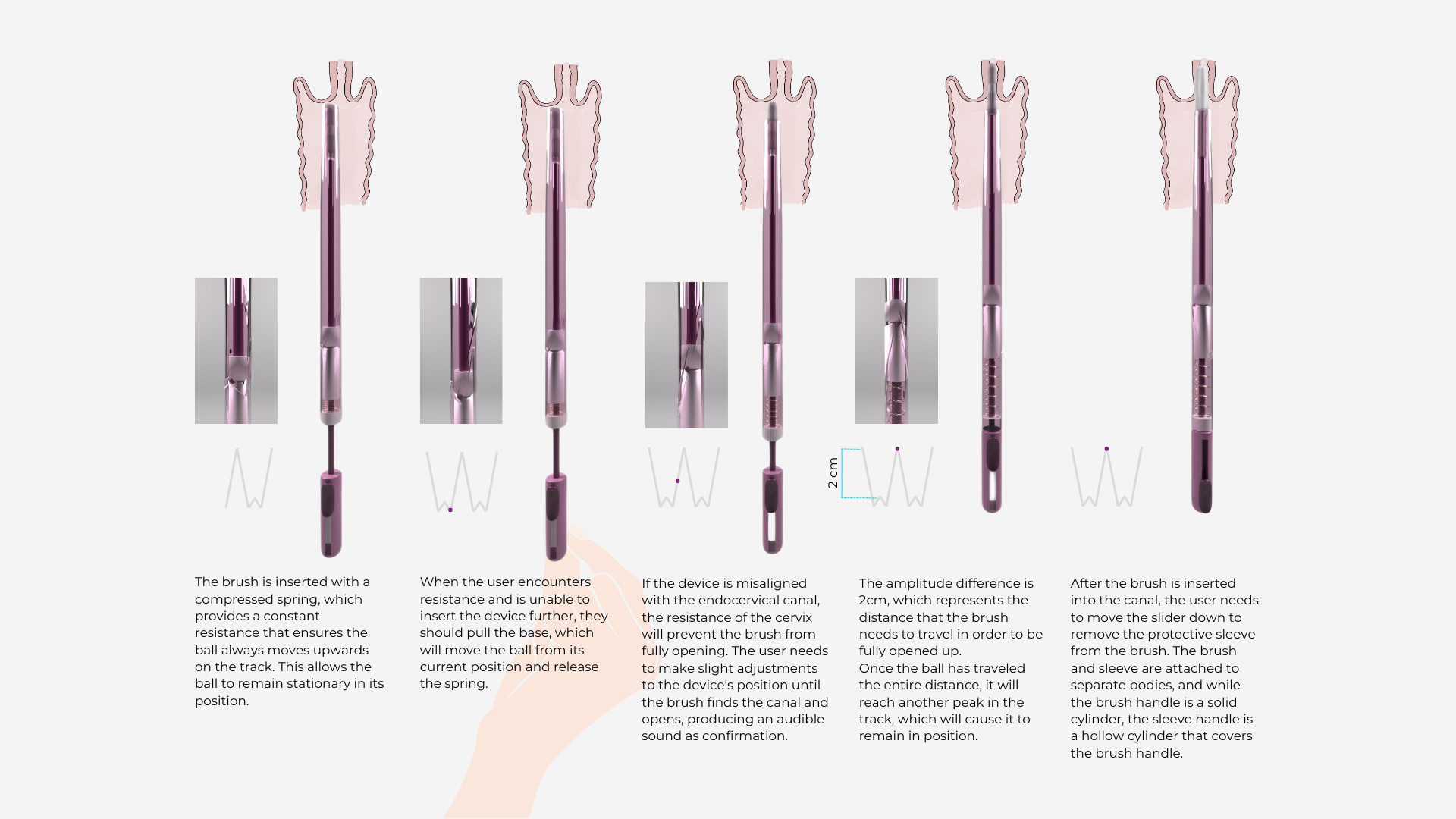
Engineering logic, made visible.
The internal mechanism handles insertion, positioning, deployment, sample collection, and retrieval - each step engineered for single-handed operation with clear haptic feedback.
- 01
Insertion
Profile shaped for accurate, comfortable positioning.
- 02
Positioning
Stable contact surface and grip cues.
- 03
Deployment
Spring-loaded brush deploys reliably with light pressure.
- 04
Collection
Brush rotation captures sample evenly.
- 05
Retrieval
Disposable head separates cleanly for sterile transport.
A reusable body, a disposable head.
- 01
Ergonomic grip
Single-handed operation. Profile sits naturally in the palm; thumb operates deployment.
- 02
Reusable + disposable architecture
Body keeps; head is swapped per use. Reduces ongoing cost and waste from full single-use devices.
- 03
Brush protection
Sterile sleeve protects the collection brush before and after use.
- 04
Transparent housing
Mechanism feedback is visible - the user sees the device is working.

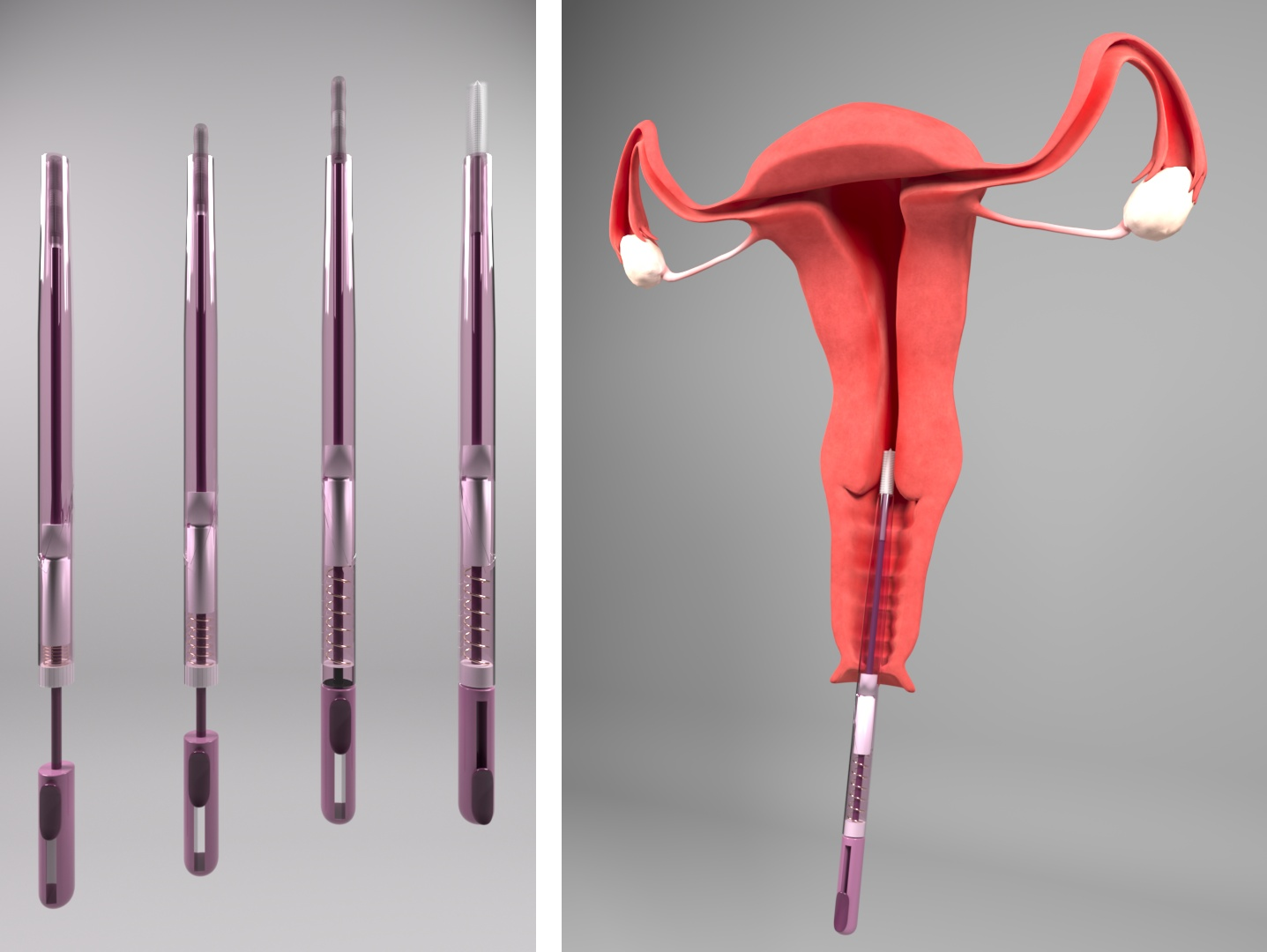
Six steps. Calm and instructional.
- 01
Open sterile head
Packaging primes the user for a clean procedure.
- 02
Insert comfortably
Profile geometry guides positioning.
- 03
Deploy collection brush
One thumb press; the device gives clear haptic feedback.
- 04
Collect sample
Brush rotates briefly; haptics confirm completion.
- 05
Remove disposable head
Snap-release; the body stays clean.
- 06
Send sample for analysis
Sterile pouch + labelled return packaging.
Reusable body, medical-grade considerations.
Material decisions prioritised hygiene, reliability, and the long-life-of-body / short-life-of-head split:
- Reusable outer body - durable medical-grade plastic with comfortable surface finish.
- Disposable collection head - sterile, single-use, recyclable where supply chain allows.
- Spring mechanism - chosen for reliability across thousands of cycles.
- Transparent housing - provides feedback while preserving structural integrity.
A device, sitting inside a system.
The product was designed within a broader healthcare ecosystem involving providers, laboratories, regulators, public health organisations, and manufacturers. A successful at-home device depends on the journey on either side of it - onboarding, packaging, sample logistics, results delivery, and follow-up care.
Designing for trust, not just function.
Balancing usability with mechanism development. Accessibility-focused thinking. Translating healthcare anxiety into design decisions rather than treating it as a marketing problem.
Prototyping with real users, clinician collaboration, usability testing, regulatory considerations, and a deeper look at packaging and onboarding as part of the product itself.
Selfscreen is a speculative concept project. It builds the design case; the regulatory and clinical work would follow.
Project status